


Only one day in Erzurum? A walkable route through the historic centre, from the castle and Clock Tower to the Double Minaret Madrasa and Yakutiye, with local food stops.
Erzurum's historic centre is compact enough to explore on foot in a single day. Monuments from the Saltukid, Seljuk, Ilkhanid and Ottoman periods stand close together around Cumhuriyet Caddesi (Republic Avenue) and the Tebriz Kapı quarter. This guide starts at the castle and works west towards the Yakutiye Madrasa, with lunch and dinner suggestions built around the city's signature dishes.
Most stops are only a few minutes apart. Museum days and visiting times change by season, so check official announcements before you set out, and remember prayer times and modest dress when visiting mosques.
Morning: Erzurum Castle and the Clock Tower
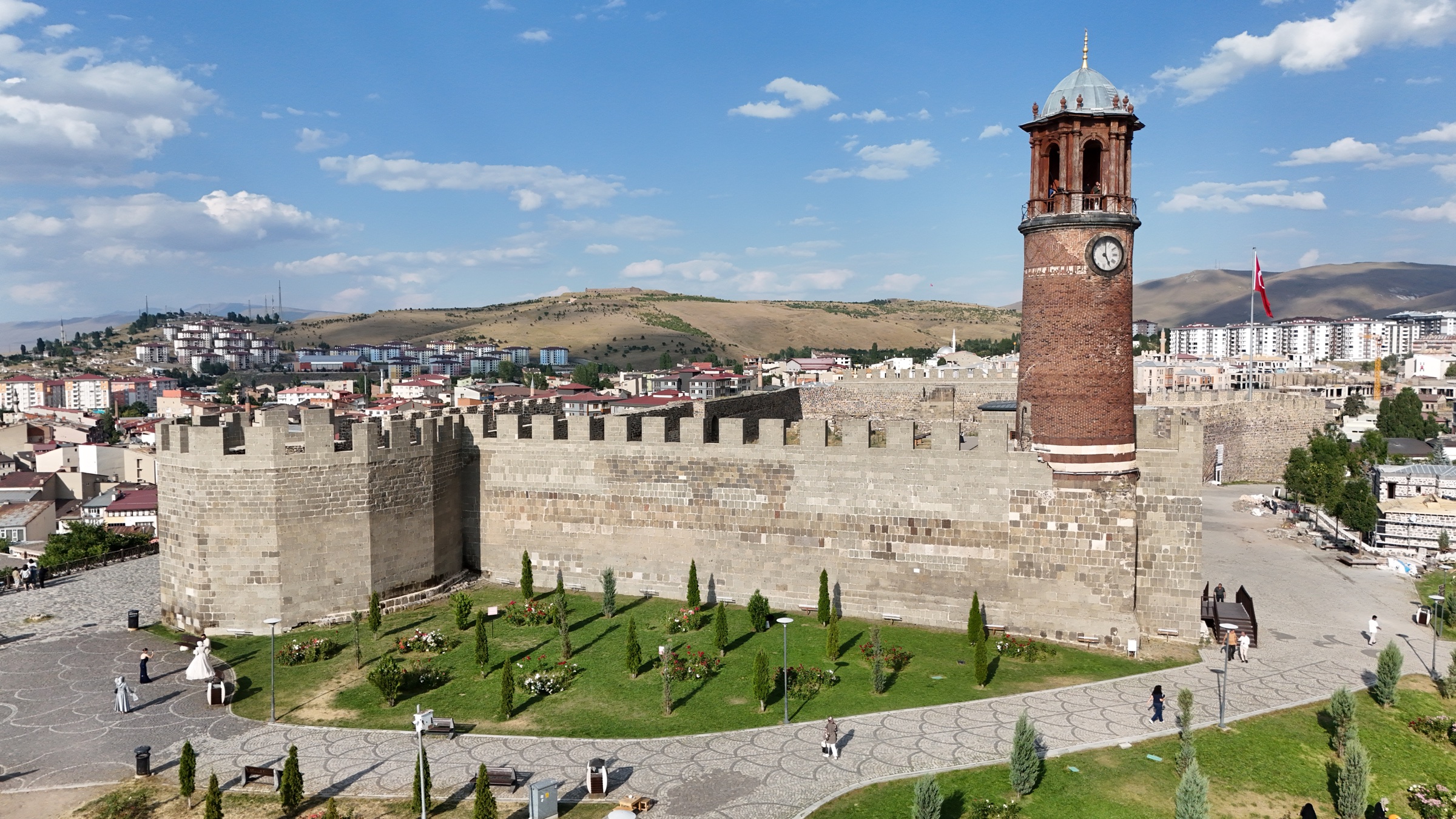
Begin with the oldest layer of the city. Erzurum Kalesi (Erzurum Castle) stands where the Tebriz Kapı quarter meets Cumhuriyet Caddesi. According to Türkiye's official Culture Portal, the inner keep was built in 415 by the Byzantine emperor Theodosius and was later repaired under Suleiman the Magnificent and Mahmud II. Most of the outer walls have not survived.
At the south-west corner of the inner keep rises the Saat Kulesi (Clock Tower), also known locally as Tepsi Minare, the "Tray Minaret". The Provincial Directorate of Culture and Tourism's guide says it was built between 1124 and 1132 by the Saltukid ruler Emir Muzaffer Gazi as a watchtower and as the minaret of the Castle Mosque; sixty-five wooden steps lead to the top. The small Kale Mescidi (Castle Mosque) stands just east of the tower.
Ulu Cami and the Double Minaret Madrasa
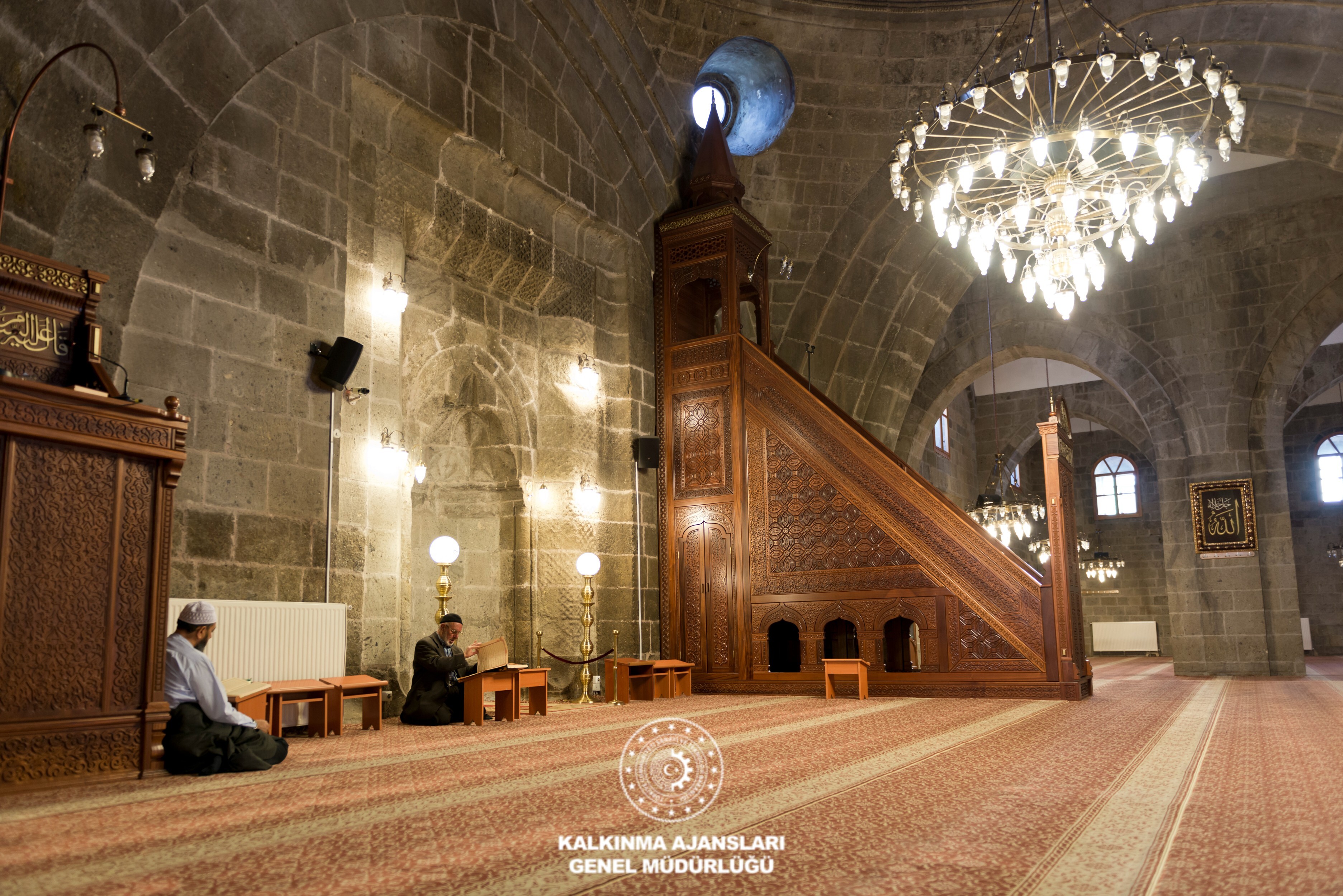
Walk south from the castle and two great buildings appear side by side. Ulu Cami (the Great Mosque) lies just south of the castle, next to the Double Minaret Madrasa. Commissioned in 1179 by the Saltukid emir Nasreddin Aslan Mehmet, it is also called the Atabey Mosque after the Saltukid title "Atabey". With seven aisles running perpendicular to the prayer-niche wall, it is regarded as the oldest mosque in Erzurum.
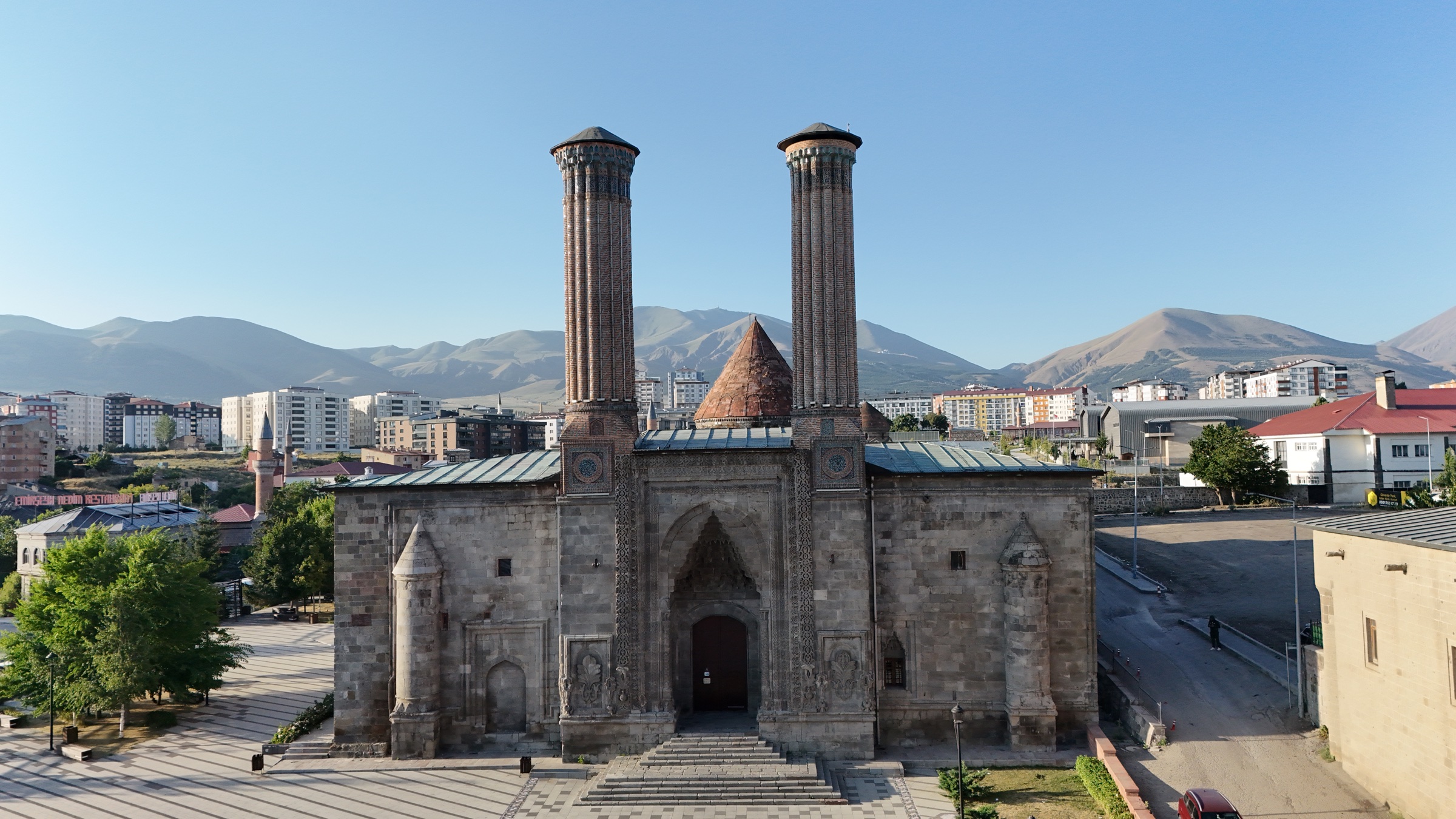
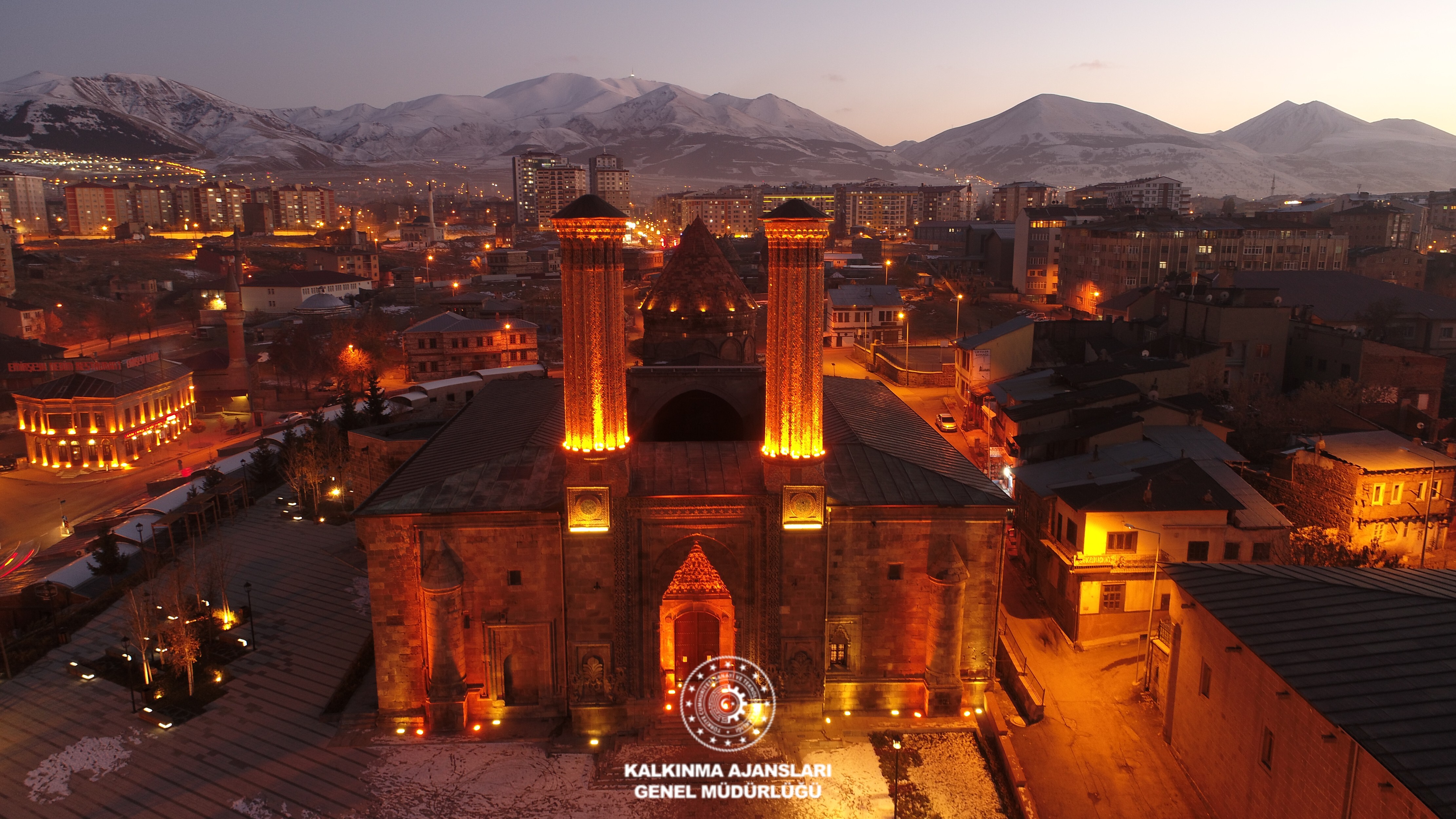
Next door is the city's emblem, Çifte Minareli Medrese (the Double Minaret Madrasa), also known as the Hatuniye Madrasa. It has no foundation inscription, so its exact date is unknown, but it is generally placed in the late 13th century. The two-storey building measures roughly 35 by 46 metres, with four iwans (vaulted halls) around an open courtyard and two 26-metre minarets framing its carved portal. The twelve-sided tomb tower attached to the main iwan is described by the Culture Portal as the largest of its era in Anatolia. The madrasa was added to UNESCO's World Heritage Tentative List in 2014 as part of the "Anatolian Seljuk Madrasas" group and now serves as a museum and exhibition hall.
The Three Tombs and Erzurum Museum
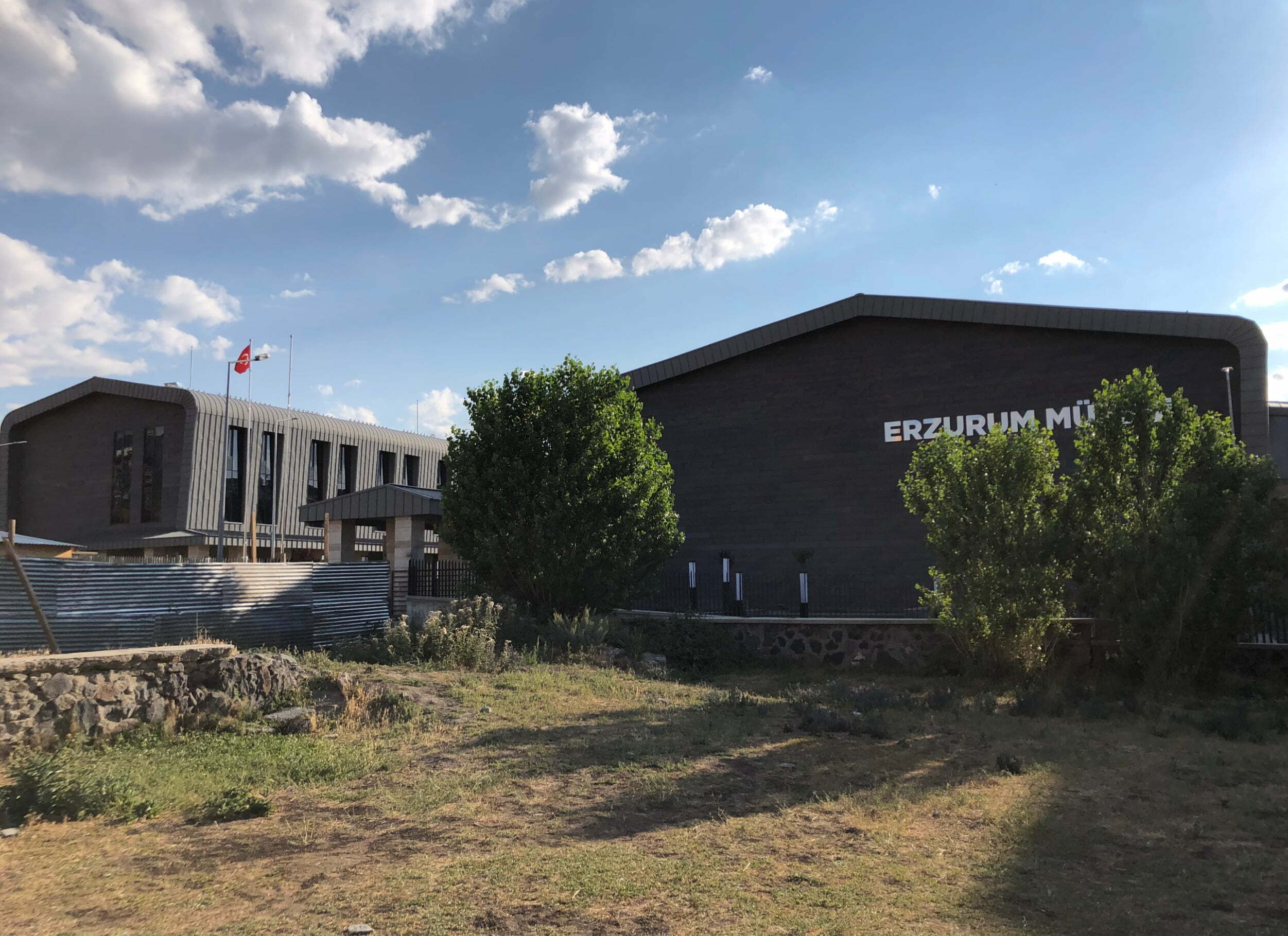
Directly behind the madrasa, to the south, stand Üç Kümbetler (the Three Tombs). The largest is thought to be the tomb of the Saltukid commander Emir Saltuk, built in the late 12th century; the other two are believed to date from the 14th century and their occupants are unknown. Look closely at the bull, snake, bat and eagle reliefs on Emir Saltuk's tomb.
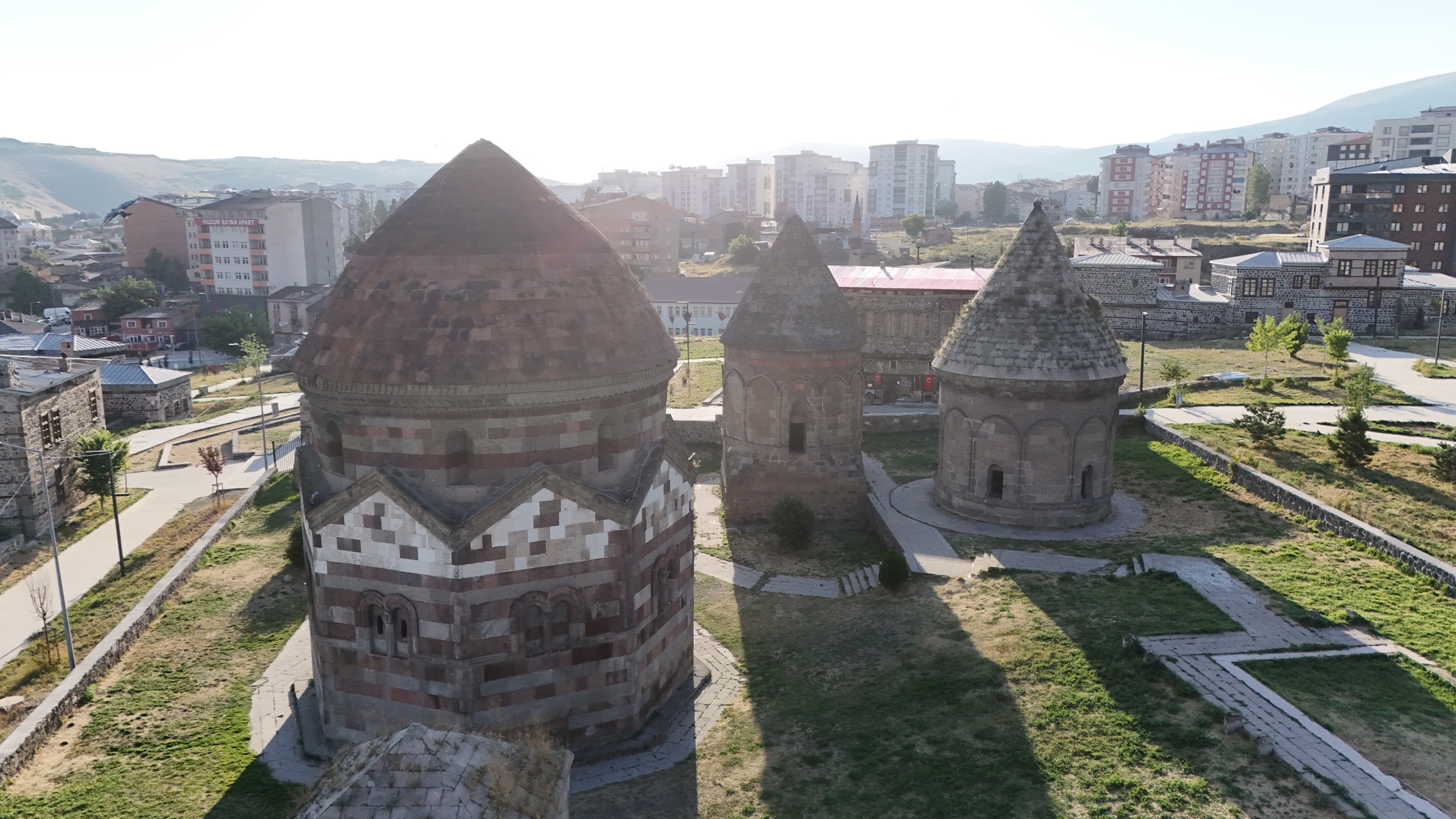
In the same garden, the Üç Kümbetler Millet Bahçesi, stands the new Erzurum Müzesi (Erzurum Museum), opened on 19 August 2023. Alongside archaeological and ethnographic collections from the region, it displays a mammoth fossil around 500,000 years old, found in Yayladağı village in the Pasinler district. An hour or two here gives useful context for the rest of the day.
Lunch: an Erzurum table
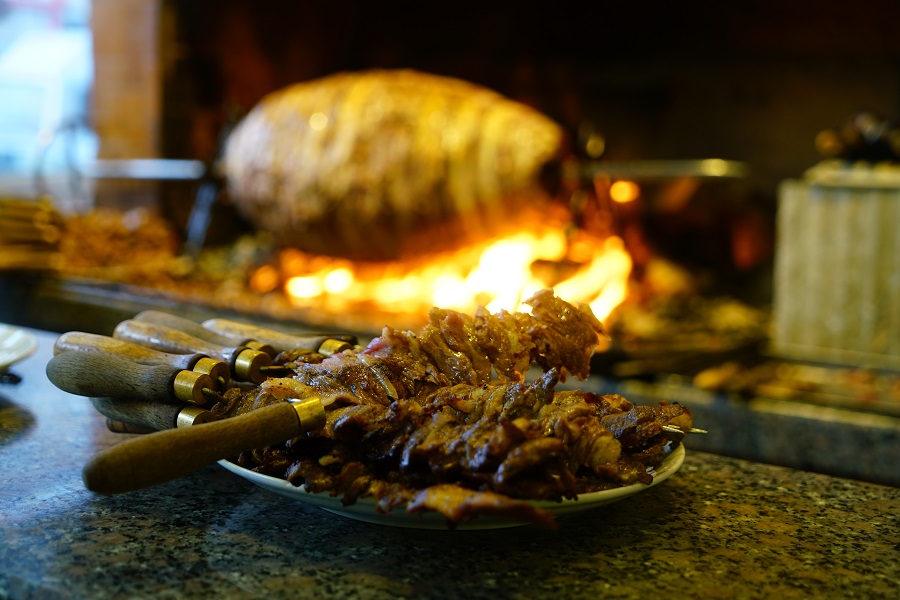
For lunch, try two local classics. Ayran aşı is a hot soup of small meatballs, whole wheat, yoghurt and aşotu (coriander leaves). Cağ kebabı is seasoned mutton cooked on a horizontal spit over a wood fire and served on small skewers called "cağ". Both are registered geographical indications with the Turkish Patent and Trademark Office.
Afternoon: Yakutiye Madrasa, Lala Paşa Mosque and Taşhan
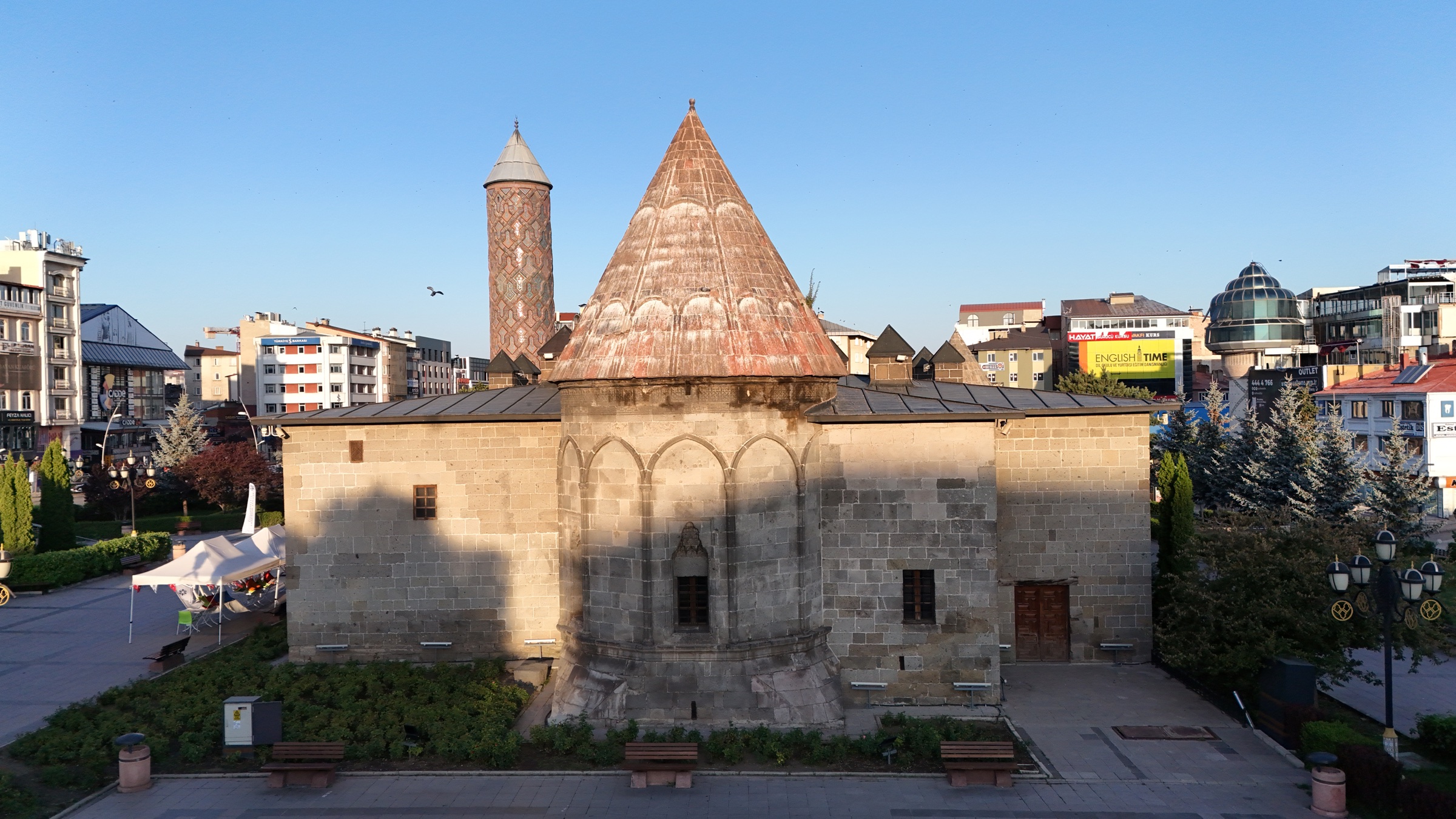
In the afternoon, walk west along Cumhuriyet Caddesi. Yakutiye Medresesi (the Yakutiye Madrasa) stands a few hundred metres west of the Double Minaret Madrasa, at the junction of Cumhuriyet and Mumcu avenues. It was built in 1310, in the reign of the Ilkhanid sultan Öljeitü, by Hoca Yakut Gazani in the name of Ghazan Khan and Bolugan Hatun. Considered the largest enclosed-courtyard madrasa in Anatolia, it now houses the Museum of Turkish and Islamic Arts and Ethnography. Do not miss the muqarnas dome over the centre of the courtyard or its single surviving minaret.
Nearby, Lala Paşa Camii (Lala Pasha Mosque) was commissioned in 1562 by Lala Mustafa Pasha while he was governor of Erzurum. Attributed to the great architect Mimar Sinan, it is the first Ottoman mosque in the city, and its tiled windows and central dome show a very different era from the Seljuk and Ilkhanid buildings you saw in the morning.
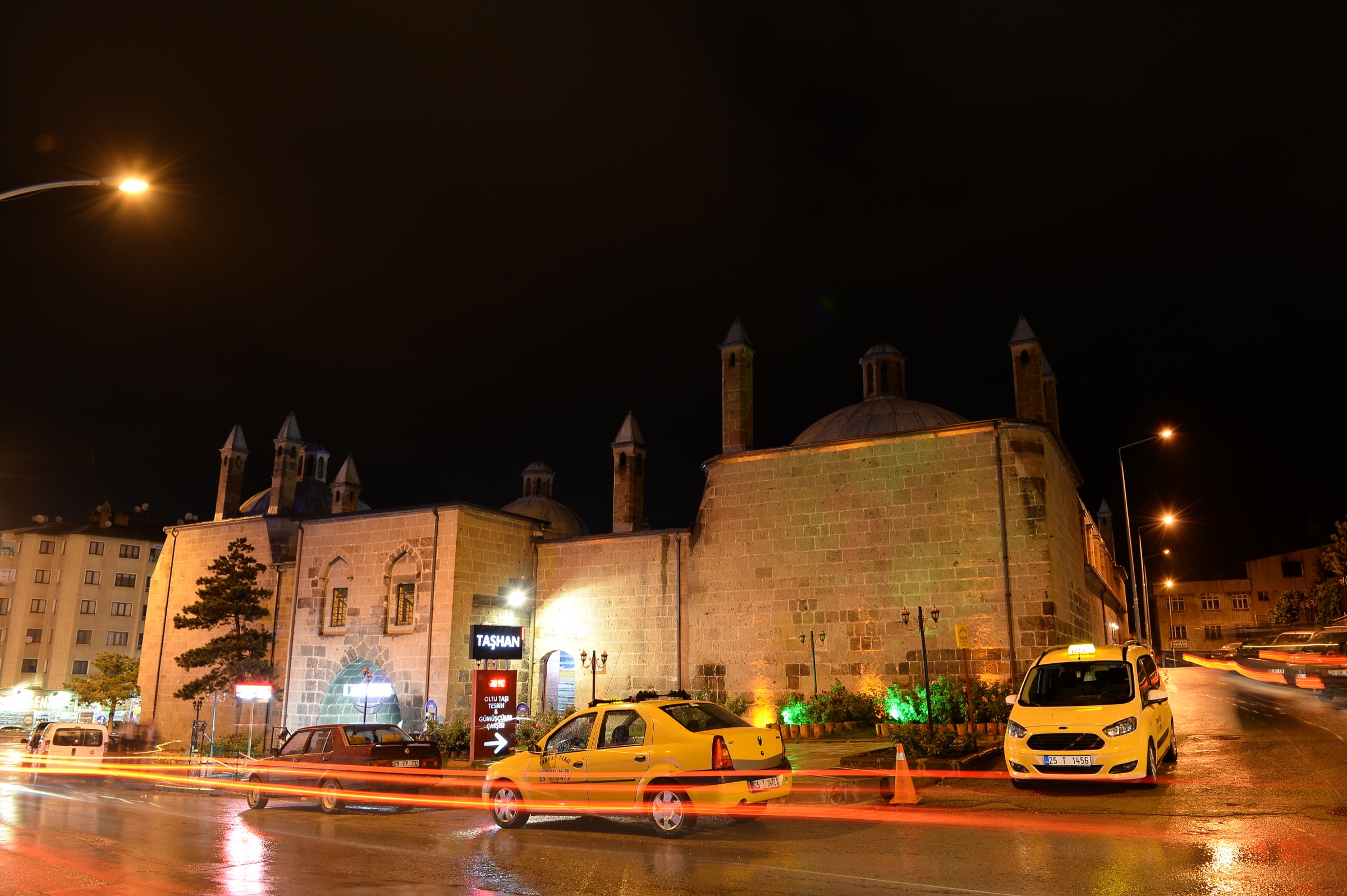
Finish at the Rüstem Paşa Kervansarayı, better known as Taşhan (the Stone Inn). Attributed to Rüstem Pasha, grand vizier to Suleiman the Magnificent, this 16th-century caravanserai still works as a bazaar, and the shops around its two-storey courtyard sell prayer beads and jewellery carved from Oltu taşı, the local black jet stone. It is the classic place to buy a souvenir of Erzurum.
Evening: kadayıf dolması and tea
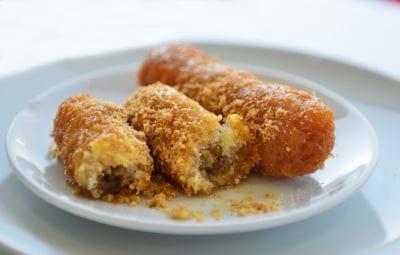
After dinner, order Erzurum's best-known dessert, kadayıf dolması. Its registration document describes palm-sized rolls of shredded pastry filled with crushed walnuts, dipped in egg, fried and soaked in cold syrup. Locals pair it with tea sipped over kıtlama şekeri, a hard sugar lump held in the mouth so it dissolves slowly.
If you have extra time
The Atatürk Evi Müzesi (Atatürk House Museum) is a late 19th-century mansion where Mustafa Kemal and his companions stayed during the 1919 Erzurum Congress; it has been a museum since 1984. The Erzurum Congress Building itself has been closed to visitors since 6 January 2026 for seismic strengthening and restoration, with no reopening date announced. For a sunset view over the city, take a car or taxi to the Abdurrahman Gazi Türbesi (Tomb of Abdurrahman Gazi), about 2.5 kilometres south-east of the centre at the foot of Mount Eğerli.
To see all of these stops in order on a map, follow the History Route.
Frequently Asked Questions
Can you see Erzurum's historic centre in one day?
Yes. Erzurum Castle, Ulu Cami, the Double Minaret Madrasa, the Three Tombs, Erzurum Museum and the Yakutiye Madrasa all lie close together around Cumhuriyet Caddesi and Tebriz Kapı. A full day is enough, including time inside the museums.
Where should a one-day walk in Erzurum start?
Erzurum Castle and its Clock Tower make a good starting point. Ulu Cami and the Double Minaret Madrasa stand just south of the castle, the Three Tombs lie behind the madrasa, and from there you can walk west along Cumhuriyet Caddesi to the Yakutiye Madrasa.
When was the Double Minaret Madrasa built?
Its exact date is unknown because it has no foundation inscription, but it is generally dated to the late 13th century. Also called the Hatuniye Madrasa, it was added to UNESCO's World Heritage Tentative List in 2014.
Is the Erzurum Congress Building open to visitors?
No. The Erzurum Congress Building has been closed to visitors since 6 January 2026 for seismic strengthening and restoration, and no reopening date has been announced.
What should I eat on a day in Erzurum?
Ayran aşı soup and cağ kebabı for lunch, followed by kadayıf dolması for dessert, are the city's best-known dishes. All three are registered geographical indications in Türkiye.
Opening days, seasons and transport can change. Please check official announcements before you travel.
More guides
 Erzurum in 2–3 DaysA season-by-season plan for 2–3 days in Erzurum: the historic centre, then Tortum Waterfall and Lake Tortum or the Narman fairy chimneys, then the redoubts or Palandöken.
 Erzurum in WinterErzurum in winter: the Palandöken, Konaklı and Kandilli ski areas, the ski jumps, the snowy old city, what to wear in the cold, getting around in snow and when the season runs.
 What to Eat in ErzurumWhat to eat in Erzurum: cağ kebabı, kadayıf dolması, su böreği, ayran aşı, kesme aşı, local cheeses and sweets, with what each dish is and how it is eaten.