General Information
Pasinler yaprak döneri is beef that has been marinated in a special sauce, cut into thin leaves (yaprak), stacked on a döner spit and roasted slowly, usually on a vertical rotisserie. It was registered in 2023 as geographical indication no. 1463 for the Pasinler Chamber of Commerce and Industry. The meat comes from the leg and rib of beef carcasses that have been rested after slaughter.
The registration document says the dish has a reputation tied to the Pasinler district of Erzurum and has long been part of everyday meals there. Opening the meat into thin leaves, marinating it and cooking it all require skill. The marinade contains onion, oil, peppers, mineral water, vinegar, yoghurt, thyme, mint and spices, and the meat rests in it for about a day.
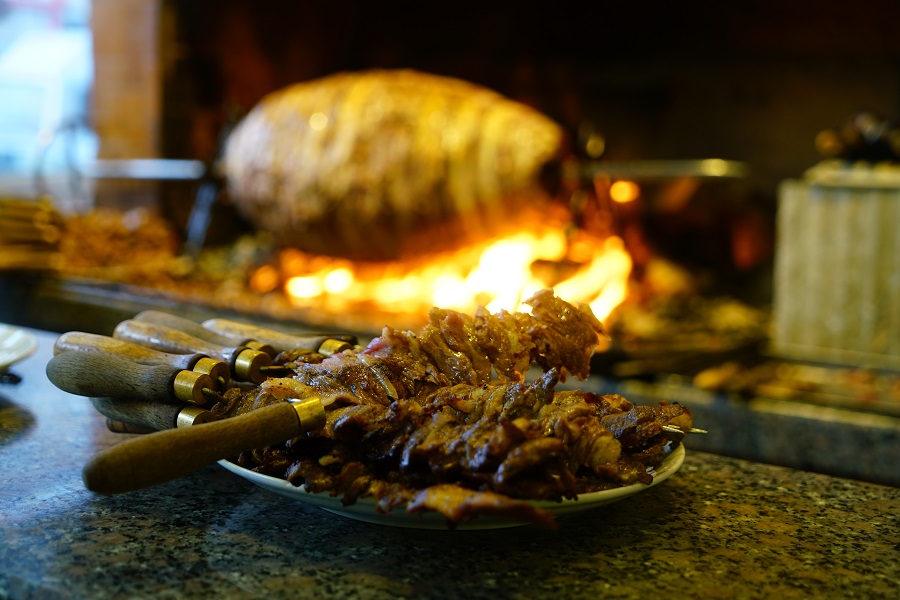
The cooked döner is sliced thinly with a döner knife. According to the document it is served on or beside rice, in bread or in 100-gram portions, and is best eaten hot. GoTürkiye also presents yaprak döner as a flavour closely associated with Pasinler.
Tip: the registration document prefers cooking over a wood fire, so if you spot a wood-fired rotisserie it is a good chance to try it. The document also recommends eating it hot, so if you take some away, do not let it sit.
Main ingredients: Beef leg and rib, tail fat; marinade of onion, sunflower and/or olive oil, peppers, mineral water, vinegar, yoghurt, thyme, mint, salt, black pepper, red pepper flakes
Where to eat: Döner and kebab houses in the Pasinler district and in Erzurum.
Service: Hot, on or beside rice, in bread, or as a 100-gram portion.
How Is It Made?
The meat is opened into leaves, pounded thinner and left for about a day in a marinade of onion, oil, peppers, mineral water, vinegar, yoghurt and spices. It is then stacked on the spit with a layer of tail fat after roughly every 15 pieces of meat. The spit is set in the rotisserie, ideally wood-fired, 10–15 centimetres from the heat, and turned slowly until well browned.





 Flavor