General Information
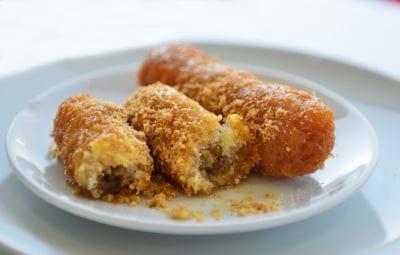
Erzurum ketesi is a pastry made from a butter-rich dough rolled thin with a long rolling pin, filled with toasted flour and baked. It was registered in 2023 as geographical indication no. 1318 for the Erzurum Commodity Exchange. The registration covers two types: sini ketesi, baked in the oven on a tray called a sini, and tandır ketesi, made with a yeasted dough and baked in a tandoor.
Sini ketesi is shaped into 12-centimetre squares, while tandır ketesi is round and 12 centimetres across. In both, rolling the sheets just 1–2 millimetres thin is what makes the kete rise and turn crisp. Besides toasted flour, tandır ketesi can be filled with white cheese and parsley or with coarsely chopped walnuts.
The filling is made by toasting flour, butter and salt until the raw flour smell has gone. It is spread on the buttered sheets, the kete is folded, brushed with egg and baked. It goes well with tea at breakfast or as a snack. The provincial directorate of culture and tourism also lists tava ketesi, a crescent of dough filled with minced meat or walnuts and fried, as part of Erzurum's cuisine; an application has been filed to register Erzurum Tava Ketesi as a geographical indication too.
Tip: according to the registration document, kete keeps for 3 days in a dry place and a week in the fridge. That makes it an easy treat to take home from Erzurum.
Main ingredients: Wheat flour, butter, water, salt, starch, egg; for tandır ketesi also milk, dry yeast and egg white; fillings of toasted flour, white cheese with parsley, or walnuts
Where to eat: Bakeries, patisseries and tandoor bread bakers in Erzurum.
Service: Warm or at room temperature with tea, at breakfast or as a snack.
How Is It Made?
Flour, butter and salt are toasted in a pan until the raw smell disappears, then cooled for the filling. The rested dough is rolled 1–2 millimetres thin with a starch-and-flour dusting and brushed with butter. For sini ketesi the edges are folded to the centre around the filling and closed into a square; for tandır ketesi strips are stacked, rolled up and coiled into a round. Brushed with egg, the kete is baked in the oven or the tandoor.





 Flavor